If parking is becoming increasingly difficult on your street, turning part or all of your front garden into a driveway can be a practical way to create convenient off-road parking while improving the appearance and usability of your property.
But can you simply remove the lawn, lay a new driveway and start parking on it?
In many cases, converting a front garden into a driveway is possible, but there are several things to consider first. From planning permission and drainage to dropped kerbs and choosing the right surface, getting these details right from the beginning can save considerable problems later.
Here’s what homeowners in England need to know before converting a front garden into a driveway.
Do I Need Planning Permission to Turn My Front Garden Into a Driveway?
Not necessarily.
For houses in England, you can generally install or replace a front driveway without applying for planning permission if you use a permeable surface that allows water to drain through it, or if rainwater is directed to a suitable permeable area within your property, such as a lawn or border.
Permeable driveway options can include gravel, permeable block paving and some porous asphalt systems.
However, if you intend to cover more than five square metres of your front garden with a traditional impermeable surface and the water cannot drain to a permeable area within the property, planning permission may be required.
These rules are designed to reduce the amount of rainwater flowing directly from driveways into drains, which can contribute to surface-water flooding.
Properties such as flats, maisonettes and listed buildings may be subject to different requirements, while permitted development rights can also be restricted in some locations.
If you are unsure, it is always worth checking with your local planning authority before work begins.
What About a Dropped Kerb?
This is one of the most important parts of converting a front garden into a driveway.
If there is a pavement between your property and the road, you normally need an approved dropped kerb, also known as a vehicle crossover, before you can legally drive across the pavement to access your new driveway.
You cannot simply drive over a standard raised pavement kerb.
A dropped kerb application is made through your local council, and the council will assess whether creating vehicle access at that location is suitable.
Factors that can affect approval include:
- The position of the property in relation to junctions
- Visibility when entering and leaving the driveway
- Trees, streetlights, utility equipment or road signs
- The width and depth of the proposed parking area
- The type of road outside the property
- Existing parking restrictions
If you already have a dropped kerb but want to make your driveway wider, you may also need permission to extend the vehicle crossover.
It is sensible to investigate this before investing in the driveway itself.
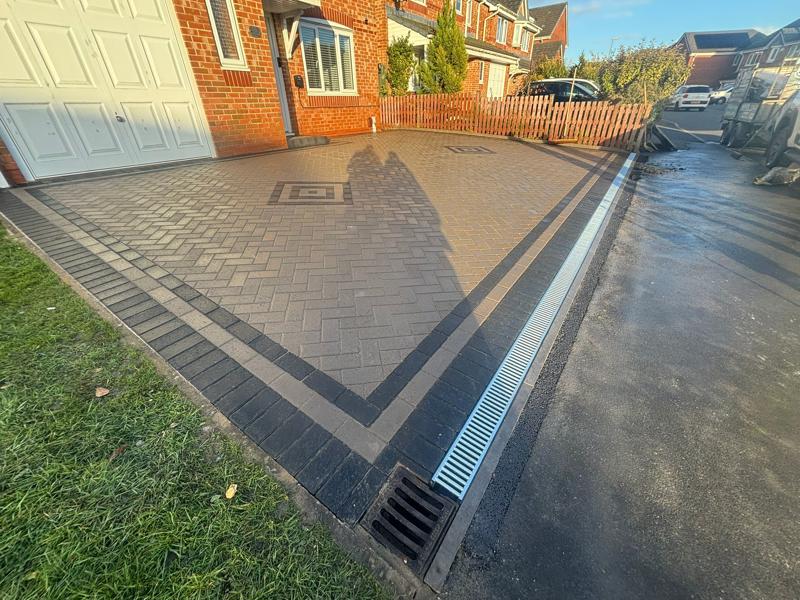
How Much Space Do You Need for a Front Garden Driveway?
Having enough room for a vehicle is not just about whether a car will physically fit.
A well-designed driveway should allow you to park without the vehicle obstructing the pavement, while also leaving sufficient room to safely enter and exit the car.
The layout will depend on the shape and dimensions of your garden, the position of your house and the access available from the road.
Professional driveway installers can assess the space and help determine how much of the garden needs to be converted while retaining features such as pathways, planting areas and borders wherever possible.
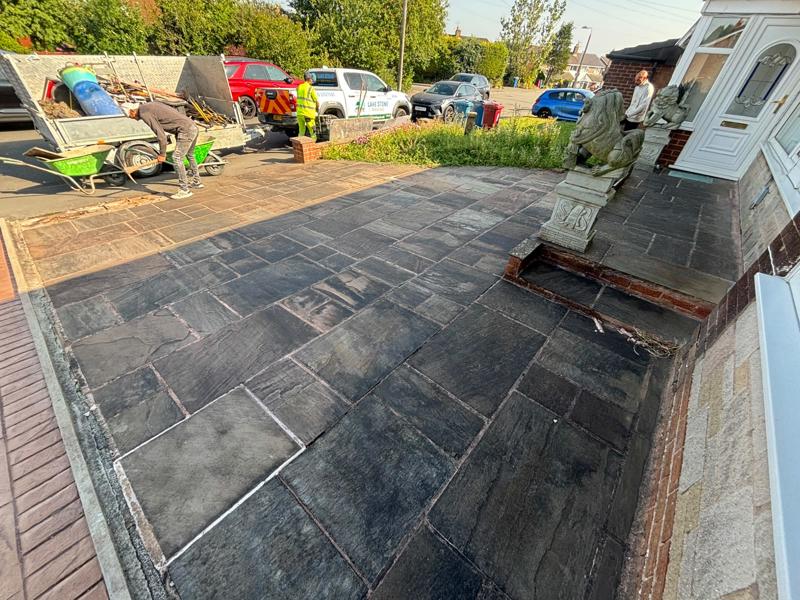
You don’t necessarily have to pave the entire front garden.
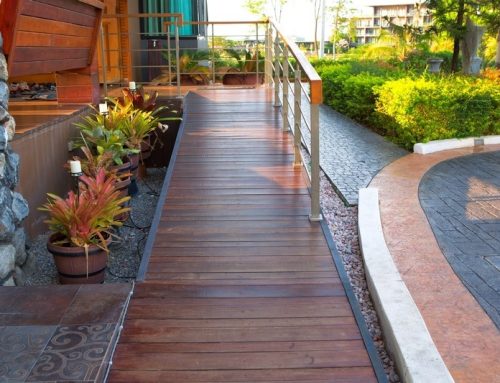
A carefully designed combination of driveway, paving and landscaping can often provide the parking space you need without making the frontage of your home feel completely hard landscaped.
What Is the Best Surface for a Front Garden Driveway?
Once you know the conversion is possible, the next decision is what type of driveway to install.
There are several popular options.
Block Paving
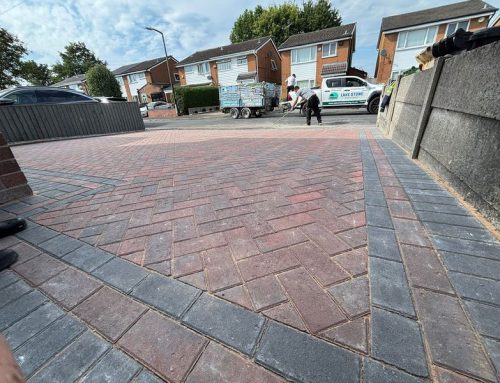
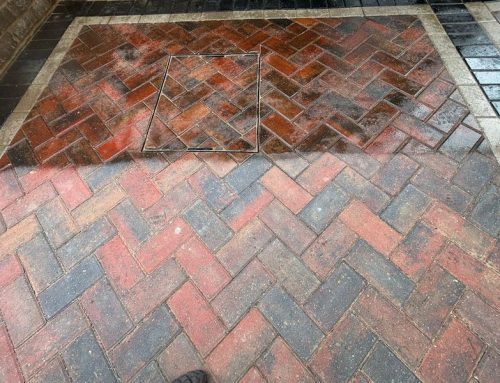
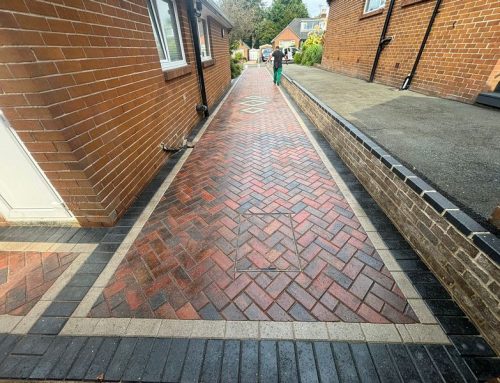
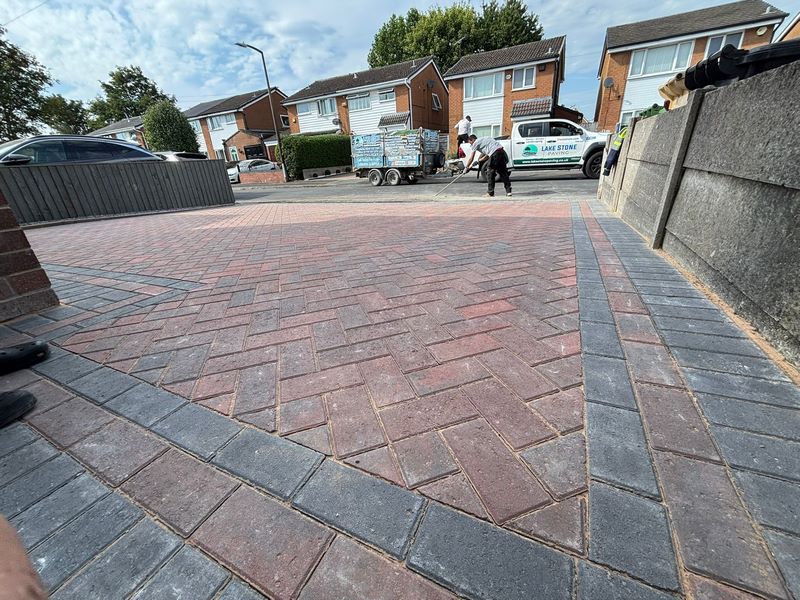
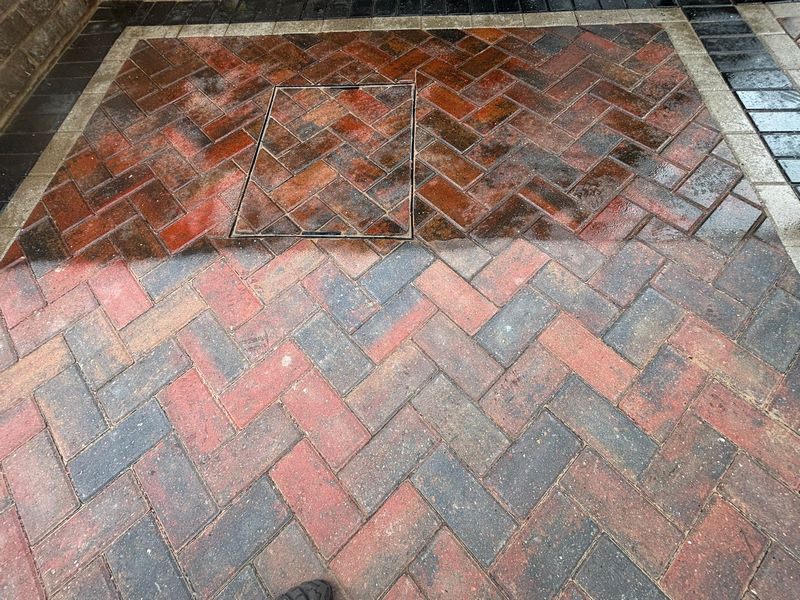
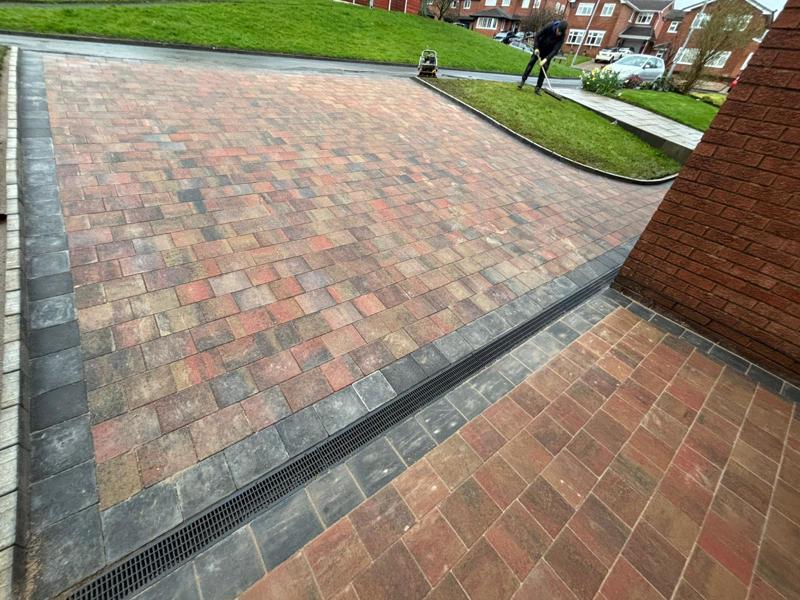
Block paving remains one of the most popular choices for residential driveways.
It offers a wide choice of colours, patterns and finishes, making it possible to create a driveway that complements both traditional and contemporary properties.
With the correct preparation and sub-base, block paving provides a strong and durable parking surface. Permeable block paving systems are also available where drainage requirements need to be considered.
Resin Driveways
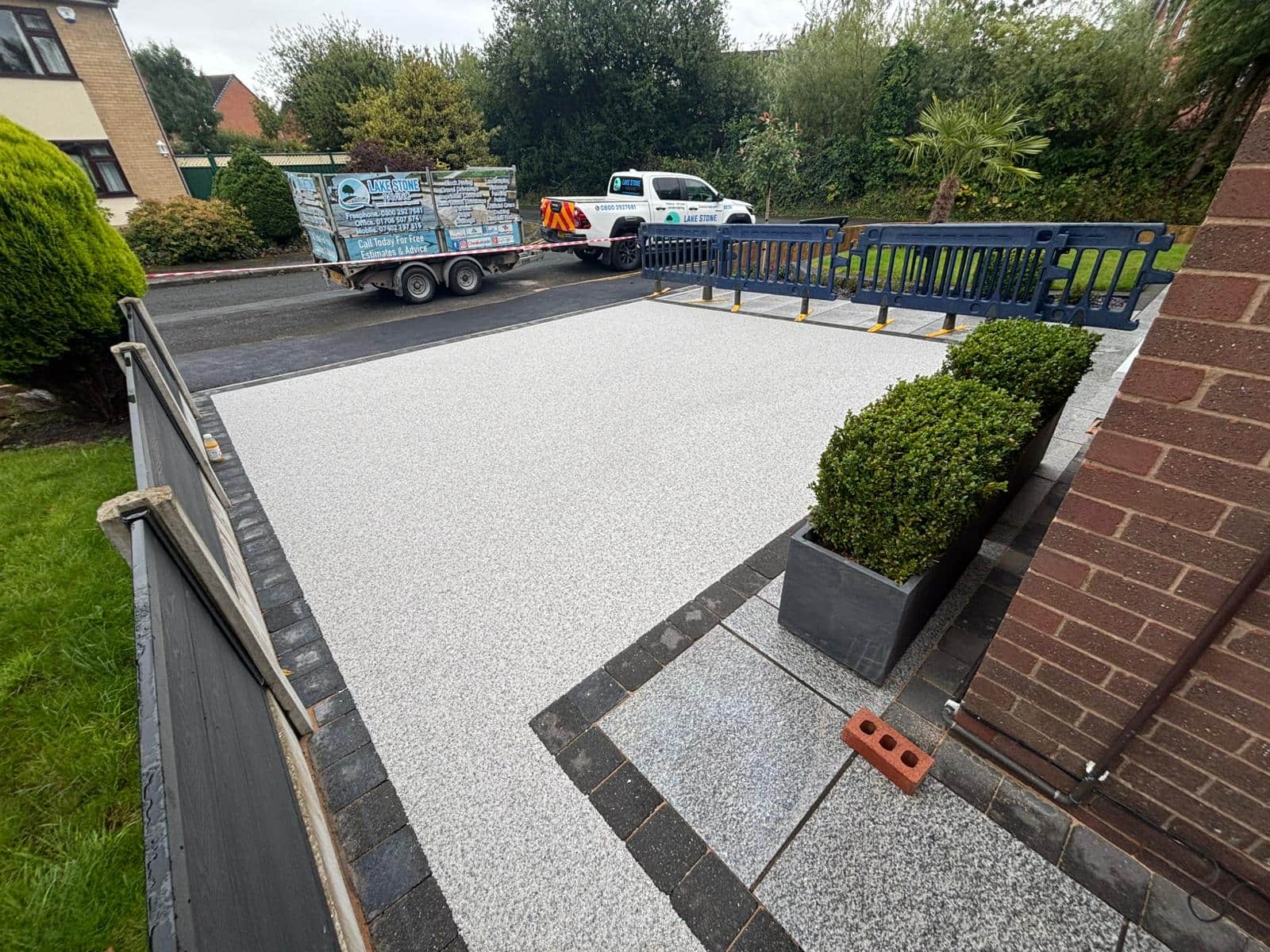
Resin-bound driveways provide a smooth, modern finish and are available in a wide range of aggregate colours.
A properly designed permeable resin-bound system can allow water to drain through the surface, making it particularly useful when drainage is an important consideration.
Resin is also popular with homeowners looking for a relatively low-maintenance driveway with a clean appearance.
Tarmac
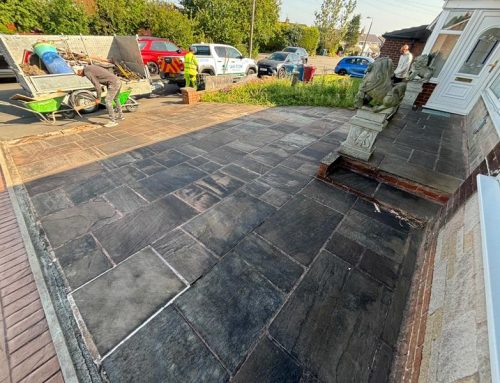
Tarmac is another durable option, particularly for larger driveways.
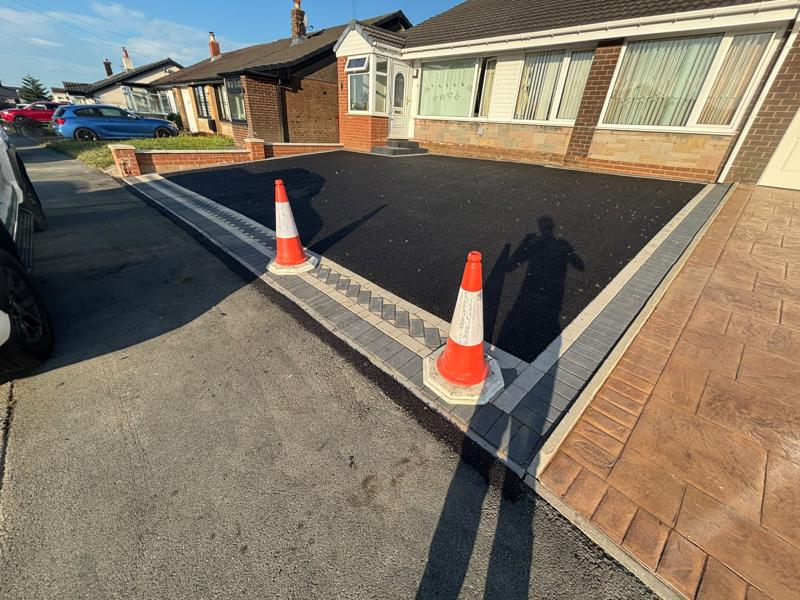
Its simple appearance works well for many properties and it can often be combined with block paved borders or edging to create a more decorative finish.
Gravel
Gravel can be an attractive option for traditional properties and larger driveways.
Because water can pass through the surface, gravel can also provide useful drainage benefits when the underlying driveway construction has been designed correctly.
The best choice will depend on your property, budget, preferred appearance, maintenance requirements and drainage conditions.
Don’t Forget About Driveway Drainage
Drainage should be considered at the design stage rather than after the driveway has been installed.
A poorly designed driveway can direct large amounts of rainwater towards the road, neighbouring properties or even towards your own house.
Depending on the design, solutions can include permeable driveway construction, drainage channels and directing water towards suitable landscaped areas within the property.
The levels and falls of the finished driveway are also important because they determine where rainwater naturally travels.
Good groundwork and drainage may not be the most noticeable parts of a finished driveway, but they are some of the most important.
Can I Remove a Wall, Fence or Hedge to Create the Driveway?
Often, yes, but this needs to be considered as part of the wider project.
A section of wall, fencing or hedge may need to be removed to create suitable vehicle access. Depending on its height, location and whether the property is listed or situated within an area with additional planning restrictions, permission may sometimes be required.
There may also be practical considerations such as retaining walls, changes in ground level and neighbouring boundaries.
An experienced driveway contractor should assess these issues before construction begins.
Is Turning Your Front Garden Into a Driveway Worth It?
For many homeowners, it can be.
Off-road parking provides convenience, particularly in areas where street parking is limited, and a professionally designed driveway can also transform the appearance of the front of a property.
The key is to look at the project as more than simply replacing grass with paving.
Access, drainage, groundwork, landscaping and the choice of materials all need to work together.
Done properly, you can create useful parking while still maintaining an attractive entrance to your home.
Thinking About Converting Your Front Garden Into a Driveway?
At Lakestone Paving, we design and install driveways across Lancashire and the surrounding areas.
We can help you make the most of the space available, from the initial driveway layout and ground preparation through to drainage, edging and the finished surface.
If you’re considering turning your front garden into off-road parking, contact us today for a free quotation and advice on the most suitable driveway for your property.