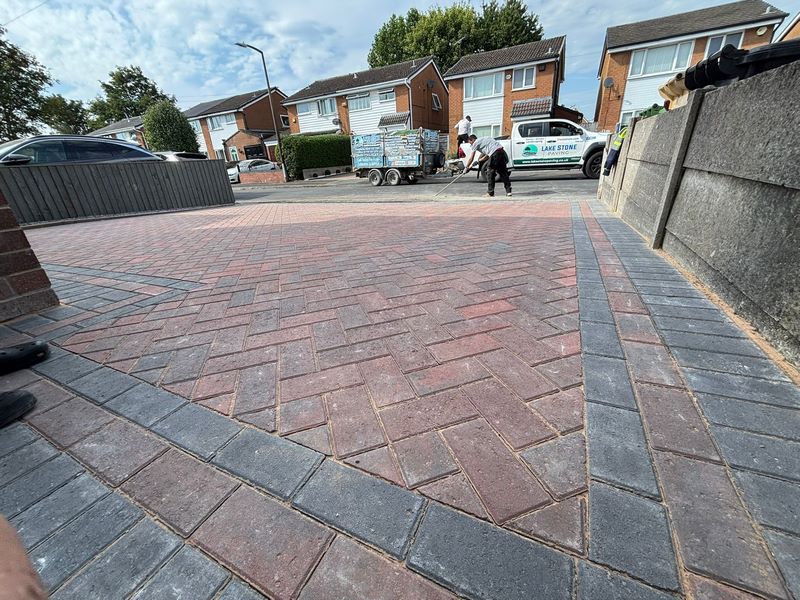
Block paving is one of the most attractive and durable choices for a driveway, but weeds appearing between the joints can quickly spoil its appearance.
A common misconception is that weeds grow up from underneath the paving. In most cases, that is not what is happening. Weed seeds usually settle into the joints from above, where they find enough moisture and organic material to start growing.
The good news is that with the right maintenance, weeds in block paving can usually be kept under control.
Why Do Weeds Appear Between Block Paving?
Over time, small amounts of soil, dust, leaves and other organic material collect in the joints between paving blocks.
Seeds carried by the wind, birds or nearby plants can then settle into this material. Add a little rain and sunlight, and the joints can provide ideal conditions for weeds to grow.
This means that even a properly installed block paved driveway can eventually develop weeds if the surface is not maintained.
Does Weed Membrane Stop Weeds?
A weed membrane beneath block paving can help prevent unwanted growth coming up from the ground, but it cannot stop seeds landing on the surface.
This is why weeds can still appear on driveways that have been professionally installed with the correct foundations.
The condition of the paving joints is often far more important when it comes to preventing surface weeds.
Keep the Joints Properly Filled
Block paving is normally finished with kiln-dried jointing sand, which fills the narrow gaps between each block.
Over time, some of this sand can be lost through weathering, cleaning and general use.
When joints become partially empty, they can collect dirt more easily and provide more room for weeds to establish themselves.
Replacing lost jointing sand periodically can therefore make a significant difference.
Be Careful When Pressure Washing
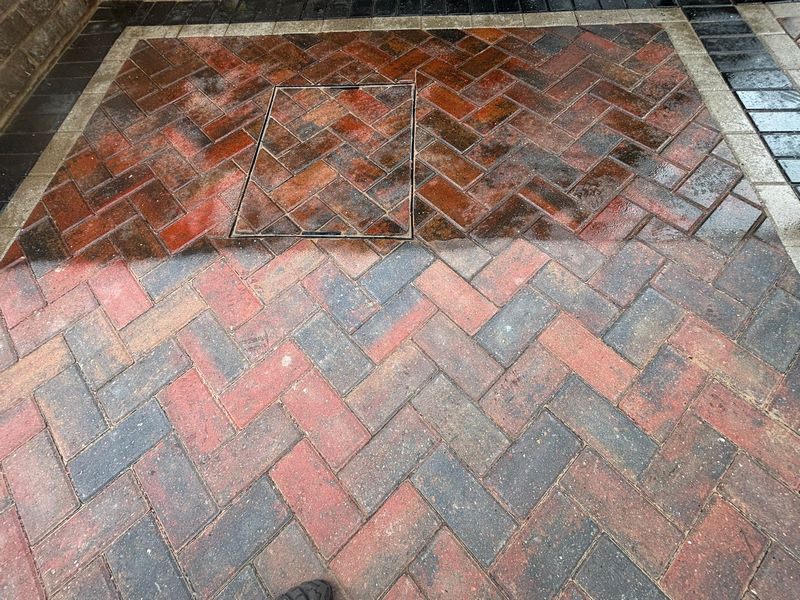
Pressure washing can be an effective way to clean block paving, but excessive pressure can remove the sand between the blocks.
If you pressure wash a driveway, the joints should usually be inspected afterwards and topped back up with suitable kiln-dried sand once the paving has dried.
Leaving the joints empty can encourage weeds while also reducing the stability of the paving.
Remove Weeds Before They Become Established
Small weeds are much easier to deal with than mature growth with an established root system.
Regularly inspecting the driveway and removing young weeds can prevent them spreading.
A paving knife or specialist joint-weeding tool can help remove growth from between individual blocks.
Whichever method you use, make sure the roots are removed wherever possible rather than simply cutting the visible part of the weed away.
Keep the Driveway Clean
Regular sweeping is one of the simplest ways to discourage weed growth.
Removing leaves, soil and other debris means there is less organic material sitting in the paving joints.
This can also help reduce moss and algae, particularly in shaded areas of the driveway.
Consider Sealing Block Paving
A suitable block paving sealer can help protect the surface while stabilising the jointing sand.
Depending on the product used, sealing can also make the paving easier to clean and make it harder for weeds to establish themselves.
The paving must be properly cleaned, dried and prepared before sealing, so it is important that the work is carried out correctly.
What If Weeds Keep Coming Back?
Persistent weeds can sometimes be a sign that the driveway needs more than routine maintenance.
If joints are repeatedly losing sand, blocks have started moving or the surface has developed low spots, there may be an issue with the installation or underlying base.
Areas of movement can allow dirt and moisture to collect, making weed growth more likely.
In these situations, lifting and resetting affected blocks may provide a better long-term solution than continually treating the weeds.
Can Block Paving Ever Be Completely Weed-Free?
It is difficult to guarantee that any outdoor paved area will remain completely free from weeds.
Seeds are constantly being carried through gardens and driveways by wind, wildlife and surrounding vegetation.
However, a well-installed driveway with properly maintained joints should be considerably easier to keep clean and weed-free.
Need Help With Your Block Paved Driveway?
If your block paving has become uneven, overgrown or difficult to maintain, professional cleaning, repair or replacement can restore both its appearance and performance.
Lakestone Paving installs and renovates driveways with careful attention to groundwork, drainage and finishing details, helping create surfaces designed to look good and perform properly for years to come. Contact us today!