Choosing the right paving is one of the biggest decisions involved in planning a new patio. The material affects the appearance of the garden, how much maintenance the patio requires and how well it complements the property.
Porcelain and Indian sandstone are two popular choices for patios. Both can create an attractive, durable outdoor space, but they offer very different styles and characteristics.
Porcelain is often chosen for clean lines and low-maintenance contemporary designs, while Indian sandstone is valued for its natural colour variation and traditional appearance.
So which material is the right choice for your garden?
What Is Porcelain Paving?
Outdoor porcelain paving is manufactured from refined materials that are shaped and fired at very high temperatures.
This production process creates a dense paving slab with low water absorption. Porcelain is available in many colours and finishes, including products designed to resemble natural stone, concrete, timber and other materials.
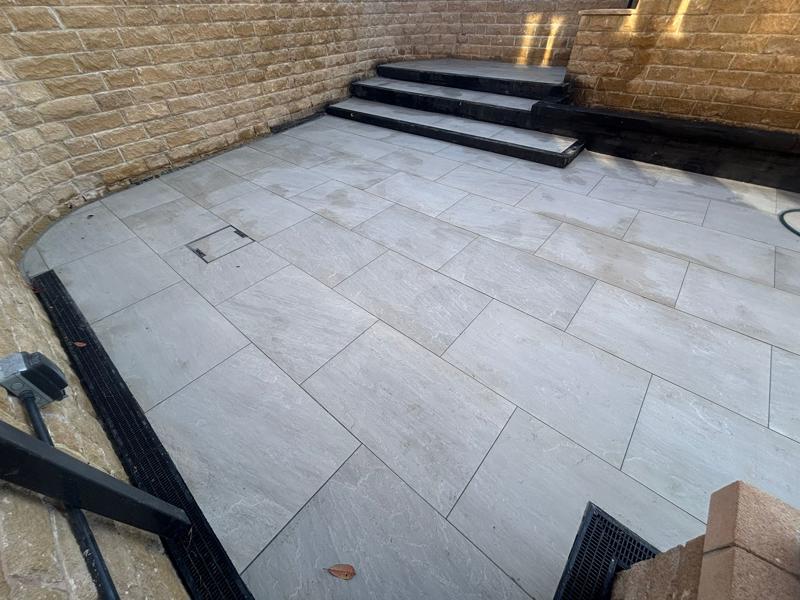
The slabs generally have consistent dimensions, allowing installers to create straight lines and regular joints. This makes porcelain particularly suitable for modern patios and structured garden designs.
It is important to select porcelain specifically manufactured for exterior paving rather than indoor tiles.
What Is Indian Sandstone?
Indian sandstone is a natural stone quarried in India and cut into paving slabs.
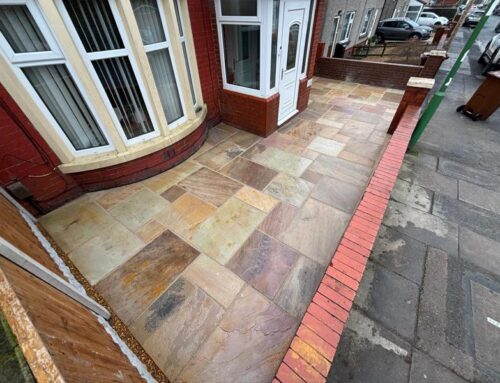
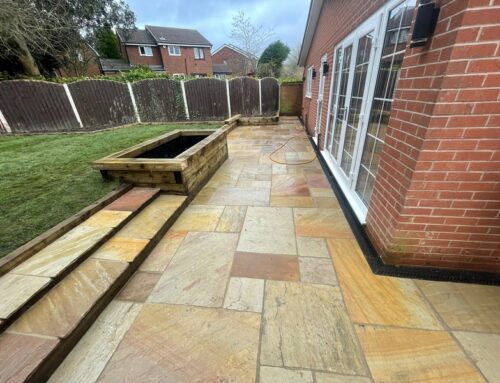
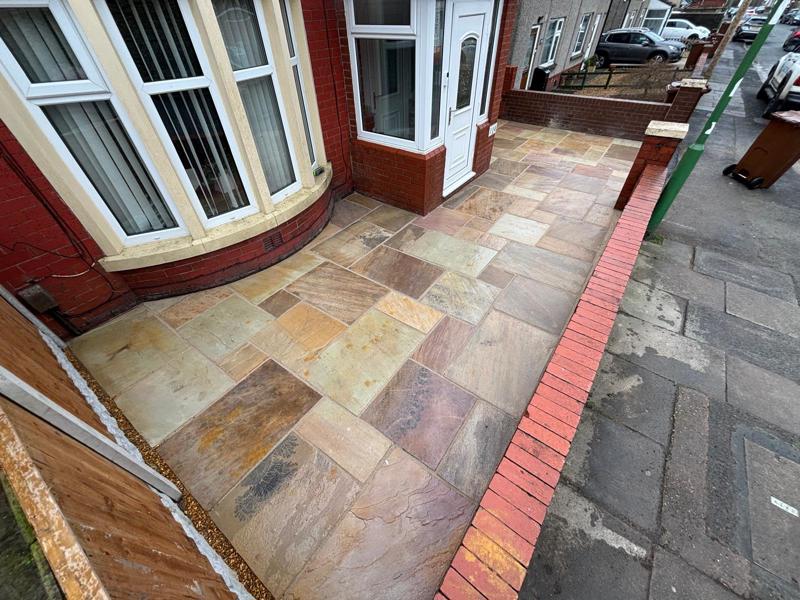
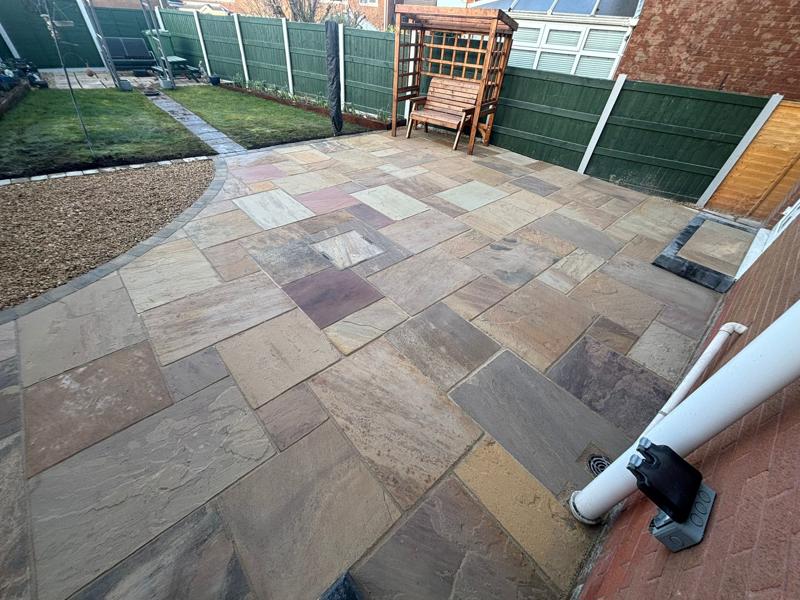
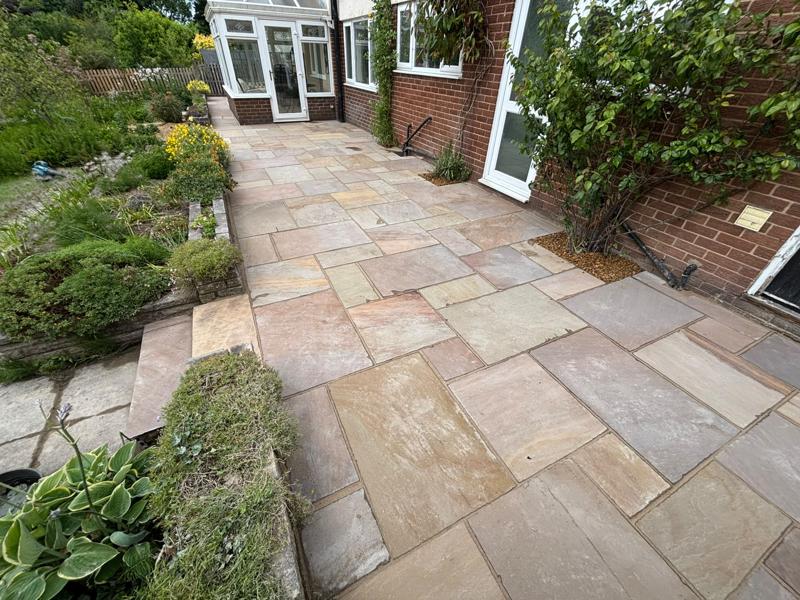
Each slab has its own colour, texture and markings. This natural variation gives sandstone much of its character and means that no two patios look exactly the same.
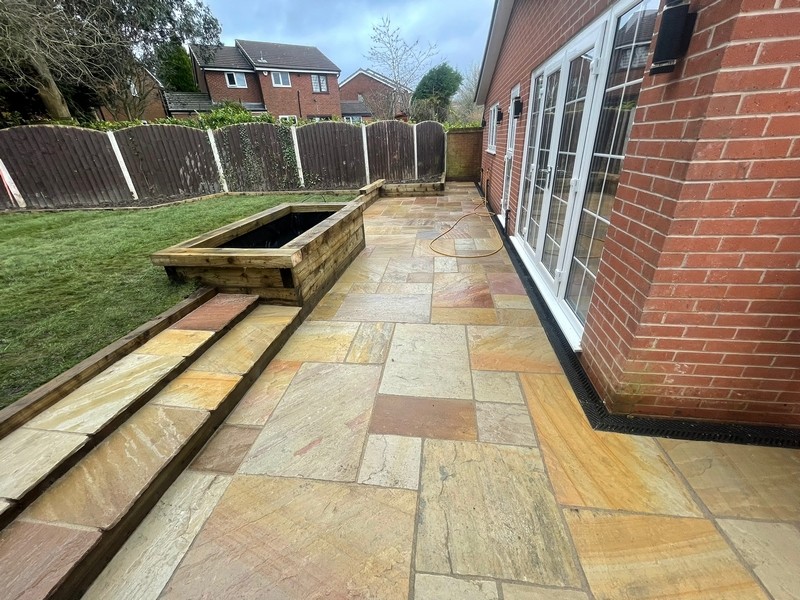
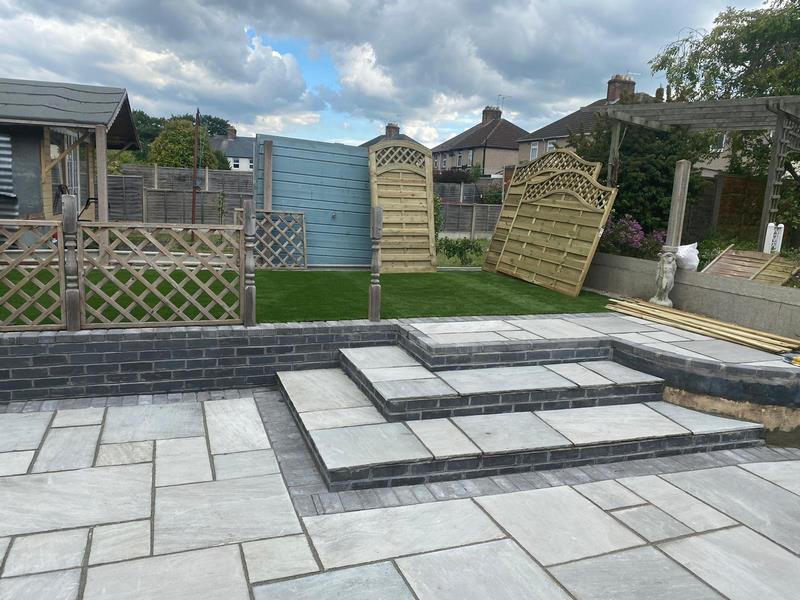
Popular sandstone colour blends include warm browns, buffs, greys and mixed tones. The surface can be riven for a traditional textured appearance or processed to create a smoother, more contemporary finish.
Sandstone is particularly well suited to cottage gardens, traditional homes and outdoor spaces where a natural, established appearance is desired.
Appearance and Style
The biggest difference between porcelain and sandstone is often their appearance.
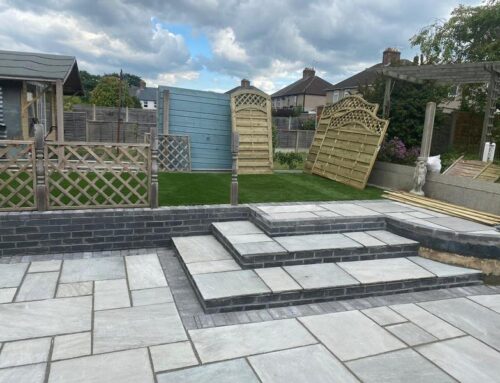
Porcelain provides a controlled and consistent finish. Although individual tiles may contain printed variations, the overall colour and thickness tend to be relatively uniform. Large-format slabs and narrow, straight joints can create a sleek architectural effect.
Porcelain works especially well with rendered walls, contemporary fencing, modern garden furniture and large areas of glazing.
Indian sandstone offers greater natural variation. Colours can change noticeably from one slab to the next, and the stone may contain veining, tonal changes and natural markings.
This makes sandstone an excellent choice when the aim is to create warmth, texture and character. Natural stone is commonly chosen for traditional landscapes, although it can also be combined with modern features for a contrasting design.
Cleaning and Maintenance
Porcelain is generally the lower-maintenance option.
Its low water absorption means that moisture and many common contaminants are less likely to soak deeply into the slabs. Regular sweeping and occasional washing will normally help keep the surface in good condition.
Most outdoor porcelain does not require sealing, although the manufacturer’s care instructions should always be checked.
Indian sandstone is more porous. This means it can absorb moisture and may be more likely to develop marks or biological growth, especially in damp, shaded parts of the garden.
Sandstone can still be maintained successfully with appropriate cleaning. Some homeowners also choose to apply a compatible natural-stone sealer to help reduce staining, although this is an optional treatment and may alter the colour or finish.
Neither material is completely maintenance-free. Dirt can collect on any outdoor surface, while shaded patios can encourage algae regardless of the paving type.
Colour Consistency
Porcelain is ideal for homeowners who want to know precisely how the finished patio will look.
Manufactured slabs provide greater consistency in colour, thickness and surface texture. However, products can vary slightly between production batches, so it is sensible to order enough paving for the complete project at one time.
Sandstone is the better option for people who appreciate natural variation. A sample slab cannot represent every colour that may appear across a full patio.
An experienced installer will mix slabs from different packs and arrange them across the area before laying. This helps distribute colours and textures naturally instead of creating obvious sections.
Installation
Both porcelain and sandstone require professional ground preparation.
A stable sub-base, suitable falls and effective drainage are essential for any patio. The slabs should be laid on an appropriate full mortar bed rather than isolated spots of mortar.
Porcelain requires specialist handling because the tiles are dense and difficult to cut. A suitable diamond blade is normally required for accurate cuts.
The backs of porcelain slabs also require an appropriate primer to create a strong bond with the laying mortar. Primer is commonly recommended for natural stone paving as well.
Sandstone slabs can vary in thickness, particularly when they have a natural riven finish. The installer must adjust the bedding mortar carefully so that the finished surface remains even and has the correct drainage falls.
Porcelain’s consistent dimensions can support precise installation, but that precision also means poor alignment or uneven joints may be more noticeable.
Durability
Both materials can provide a long-lasting patio when the paving is suitable for outdoor use and installed correctly.
Porcelain is dense, hard-wearing and resistant to many forms of staining and moisture absorption. Its manufactured surface also maintains a relatively consistent appearance over time.
Sandstone is naturally durable but will gradually weather. For many homeowners, this ageing process adds to its appeal. However, softer or lower-quality stone may be more vulnerable to surface deterioration.
The quality of the particular paving product is as important as the general material. Homeowners should consider the supplier, technical specification and ethical sourcing of natural stone rather than making a decision based on price alone.
Slip Resistance
Outdoor porcelain paving usually has a textured finish designed to provide grip. However, not every porcelain tile is intended for outdoor use, so the product specification must be checked.
Riven sandstone naturally has a textured surface, although smoother sandstone finishes may behave differently when wet.
No paving surface can be guaranteed to remain slip-free in every condition. Moss, algae, leaves, ice and surface contamination can all reduce grip, making routine cleaning important.
Which Patio Material Should You Choose?
Choose porcelain when you want:
- A modern and consistent appearance
- Straight lines and regular joints
- Low water absorption
- Easier routine cleaning
- A wide choice of contemporary finishes
Choose Indian sandstone when you want:
- Natural colour and texture
- A traditional or rustic appearance
- Unique variation between slabs
- A material that weathers naturally
- A patio that complements an older property
Neither material is automatically better. The right choice depends on your property, garden design, maintenance preferences and budget.
Lakestone Paving designs and installs porcelain and Indian sandstone patios throughout Lancashire and surrounding areas. We can help you compare colours, formats and layouts before creating a patio that suits your home and lifestyle. Contact us today for a free, no-obligation quotation.