Once the clocks go back and the weather turns, a lot of homeowners put their driveway plans on hold until spring. It’s easy to assume that cold, wet months and building work don’t mix, and that it’s better to wait for longer days and drier ground.
It’s one of the questions we’re asked most at this time of year, and the answer may surprise you. In most cases, you can install a new driveway in winter, and plenty of our customers do. Some surfaces suit the colder months far better than others, though, and the weather on the day matters much more than the time of year.
Here in Lancashire and West Yorkshire, winter means short days, rain that rolls in off the Pennines, and the odd hard frost on higher ground around Rossendale and Hebden Bridge. None of that rules out a new driveway. It just means the job needs planning around the conditions rather than ignoring them.
This guide explains what cold weather actually affects, which driveway types work best between November and March, and what we do to make sure a winter installation lasts as long as a summer one.
What winter weather actually affects
It isn’t the month on the calendar that causes problems. It’s four specific conditions.
- Frozen ground. You can’t dig out, level or compact a sub-base properly on frozen soil. When it thaws, the ground moves, and so does anything built on it.
- Low temperatures. Some materials need warmth to set or bond. Concrete cures slowly in the cold and can be damaged if it freezes before it has hardened. Resin systems have minimum temperatures set by the manufacturer. Hot tarmac loses heat quickly, giving less time to roll it flat.
- Heavy or persistent rain. A waterlogged sub-base is hard to compact, and some surfaces can’t be laid in the wet at all.
- Short daylight hours. With fewer working hours in the day, jobs can take a little longer from start to finish.
The good news is that a typical Lancashire winter has plenty of dry, frost-free spells between the bad days. A good installer works with the forecast rather than against it.
Which driveways can be laid in winter?
Block paving and gravel are the most winter-friendly options. Resin and imprinted concrete are the most weather-dependent and are often best booked for spring.
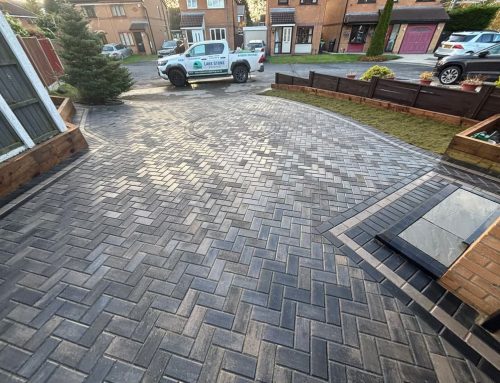
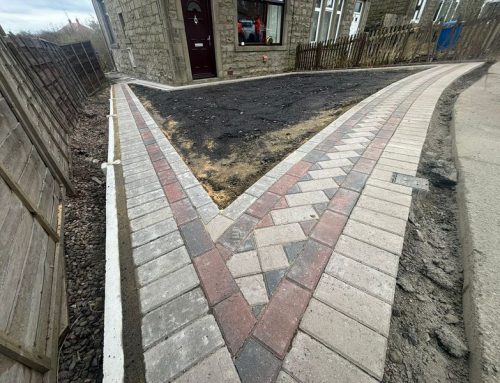
Block paving
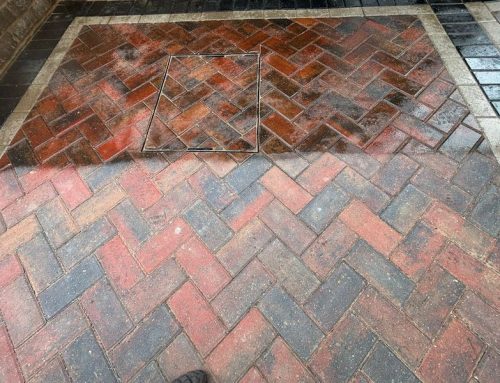
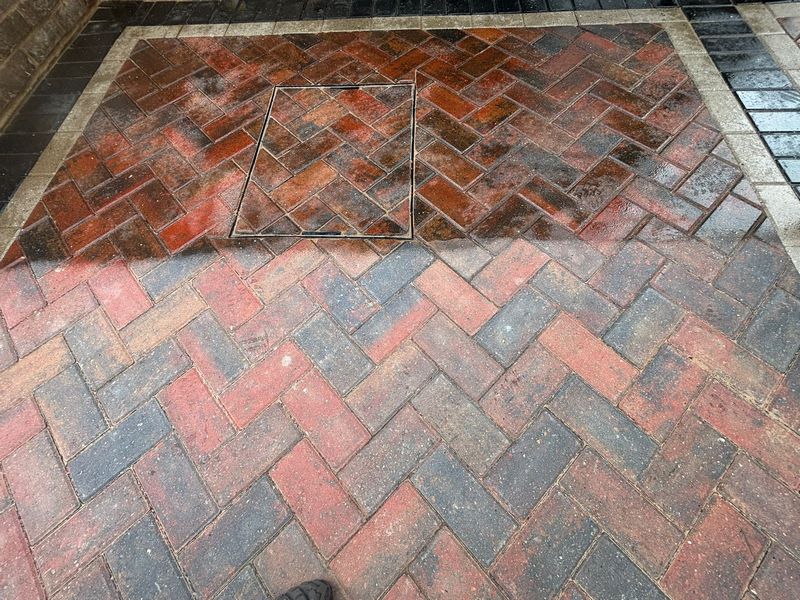
Block paving is one of the best choices for a winter installation. The main thing to avoid is groundwork on frozen or waterlogged days. The kiln-dried sand in the joints may need topping up once the weather dries out.
Gravel
Gravel has very few weather restrictions once the sub-base is in. On sloping drives, a gravel grid stops the stones migrating downhill.
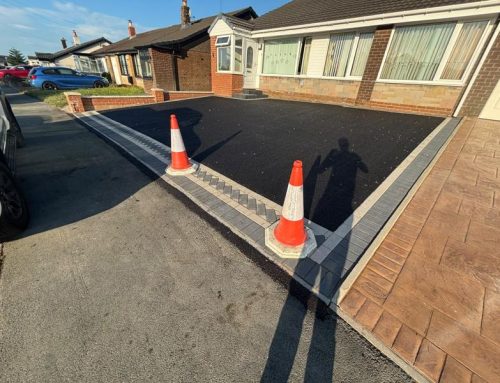
Tarmac
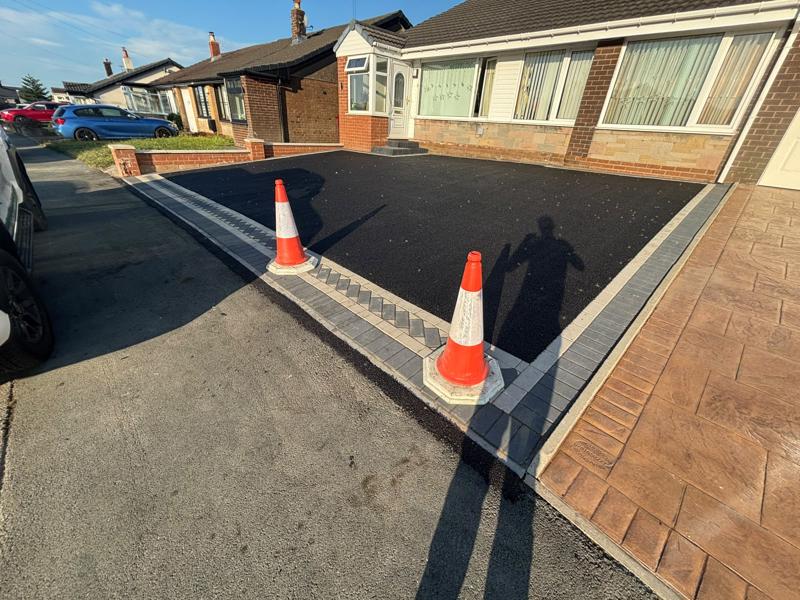
Tarmac can be laid in winter during dry spells. It cools quickly in cold air, so it needs an experienced crew who can lay and roll it fast.
Indian sandstone and porcelain patios
Patios are usually fine in winter. The mortar bed needs frost-free days to set, so we time the laying around the forecast.
Imprinted concrete
Imprinted concrete is more limited in winter. Concrete must not freeze while it cures, so it needs a run of mild days or protection overnight.
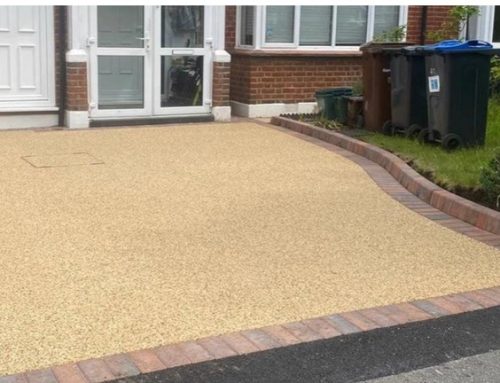
Resin bound
Resin needs dry ground and temperatures above the manufacturer’s minimum. It’s often best left until spring.
Groundworks such as digging out, drainage and the sub-base can usually go ahead on any day the ground isn’t frozen or waterlogged. For the more weather-sensitive surfaces, we can sometimes do the preparation in winter and lay the final surface in the first suitable spell.
The benefits of booking in winter
Winter is the quiet season for driveway work, and that works in your favour.
- Shorter wait times. Spring and summer diaries fill up fast. Booking in winter often means getting started weeks sooner.
- Ready for spring. Get the work done now and enjoy a finished driveway and garden from the first sunny weekend, instead of joining the queue.
- You can see your drainage working. Winter rain shows exactly where water pools and runs, so drainage can be designed around real conditions, not guesswork.
- Less disruption to garden time. Nobody misses their front garden or patio in January the way they do in July.
How we handle winter installations
We never lay a surface in conditions that would shorten its life, whatever the time of year.
- We recommend the right surface for the season. If you’ve set your heart on resin or imprinted concrete, we’ll be honest about whether it’s better to wait a few weeks.
- We plan around the forecast. We keep a close eye on the weather in the days before and during your job, and we’ll schedule the weather-sensitive stages for the best days.
- We’ll move a day rather than cut corners. If frost or heavy rain is due on a critical day, we’ll talk to you and reschedule that stage.
- We get the groundwork right. A properly dug, compacted sub-base with good drainage is what stops a driveway sinking or cracking, in any season.
- We give clear aftercare advice. We’ll tell you when it’s safe to walk and drive on your new surface, and what to avoid in the first few weeks, including de-icing salt.
Frequently asked questions
Will a driveway laid in winter last as long as one laid in summer? Yes, as long as it’s laid in suitable conditions. Problems come from cutting corners on bad days, not from the season itself.
What happens if the weather turns halfway through the job? We pause the weather-sensitive stages and pick back up when conditions allow. We’ll keep you updated so you always know where things stand.
Can I grit or salt my new driveway? Ask us first. Some new surfaces shouldn’t be salted in the first few weeks, and we’ll tell you the safest way to deal with ice on yours.
Is it worth getting a quote now for a spring job? Definitely. Booking early secures your place before the spring rush, and we can survey your drainage while it’s actually raining.
Thinking about a new driveway this winter?
Whether you want work started straight away or booked in for spring, we’re happy to visit, look at your space and recommend the best option for the time of year. Contact us today.